
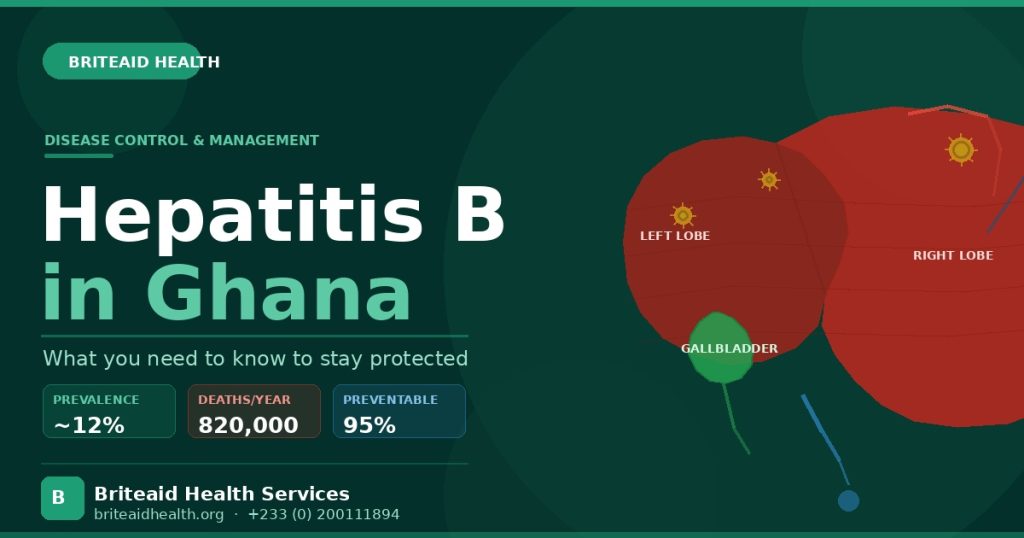
KEY FACT: An estimated 12% of Ghana’s adult population lives with Hepatitis B — many without knowing it. Hepatitis B is one of the most significant yet most preventable public health challenges in West Africa.
At Briteaid Health Services, we see the real-world impact of liver disease every day. As a specialist gastro and liver health clinic, our mission goes beyond treatment — it is about helping you understand, control, and manage disease before it takes hold. This post covers everything you need to know about Hepatitis B: what it is, how it spreads, how it progresses, and most importantly, what you can do about it.
| 296 Million People living with Hepatitis B globally (WHO) | 820,000 Deaths per year from Hepatitis B-related causes | 90% Of infected adults who naturally clear acute infection |
What is Hepatitis B?
Hepatitis B is a viral infection caused by the Hepatitis B virus (HBV) that primarily attacks the liver. It can cause both acute (short-term) and chronic (long-term) illness. While acute hepatitis B often resolves on its own in adults, chronic infection — which is far more common in people infected at birth or in early childhood — can silently damage the liver over decades, leading to cirrhosis, liver failure, or liver cancer.
The silent danger: Up to 70% of people with chronic Hepatitis B experience no symptoms for years, even as the virus causes progressive liver damage. Regular screening is the only way to know for certain.
How Does Hepatitis B Spread?
HBV is spread through contact with the blood, semen, or other body fluids of an infected person. The most common routes of transmission in Ghana include:
- Mother-to-child transmission during childbirth — the most common route in sub-Saharan Africa.
- Unprotected sexual contact with an infected partner.
- Sharing sharp objects such as needles, blades, or tattooing equipment.
- Blood transfusions with unscreened blood.
- Healthcare exposure — needlestick injuries in medical settings.
Importantly, Hepatitis B is NOT spread through casual contact — hugging, coughing, sharing food or water, or breastfeeding do not transmit the virus.
How Does the Infection Progress?
Understanding the stages of Hepatitis B is key to managing it effectively
| Acute Phase First 6 months. Most adults recover naturally. Some experience flu-like symptoms. | Chronic Phase Infection lasting >6 months. Often silent. Liver inflammation continues over years. | Advanced Disease Cirrhosis, liver failure, or hepatocellular carcinoma if left unmanaged. |
Recognising the Symptoms
When symptoms do appear — usually during acute infection — they can include:
- Yellowing of the skin and eyes (jaundice)
- Dark-coloured urine
- Extreme fatigue and weakness
- Nausea and vomiting
- Pain in the upper right abdomen
- Loss of appetite
- Joint pain and muscle aches
- Pale or clay-coloured stools
When to seek care immediately: If you notice yellowing of the eyes, severe abdominal pain, or confusion — visit a specialist clinic right away. These could indicate serious liver involvement.
Disease Control: Prevention Strategies That Work
- Vaccination: The Hepatitis B vaccine is safe, highly effective, and available. It is part of Ghana’s Expanded Programme on Immunisation (EPI). If you were not vaccinated at birth, speak to a healthcare provider about catch-up vaccination.
- Test during pregnancy: All pregnant women should be screened for Hepatitis B. Infants born to HBsAg-positive mothers need immediate vaccination and HBIG within 12 to 24 hours of birth.
- Know your status: A simple blood test (HBsAg test) tells you whether you carry the virus. This is the cornerstone of disease control.
- Safe practices: Use condoms consistently, avoid sharing sharp instruments, and insist on screened blood before any transfusion.
- Regular liver monitoring: If you are HBsAg-positive, regular liver function tests, viral load monitoring, and liver ultrasounds are essential to detect complications early.
Managing Chronic Hepatitis B
There is currently no cure for chronic Hepatitis B, but it is highly manageable. Antiviral medications — such as tenofovir and entecavir — can suppress the virus to undetectable levels, dramatically reducing the risk of liver damage and cancer. Management also involves:
- Avoiding alcohol completely, which accelerates liver scarring.
- Maintaining a healthy weight to reduce the risk of fatty liver co-existing with HBV.
- Informing sexual partners and close household contacts so they can be tested and vaccinated.
- Attending all follow-up appointments — consistent monitoring is what keeps chronic HBV from progressing.
- Eating a liver-friendly diet rich in fruits, vegetables, and whole grains while limiting processed and fatty foods.
The Role of Endoscopy in Hepatitis B Management.
In patients with advanced liver disease from chronic Hepatitis B, complications such as oesophageal varices — enlarged veins in the food pipe — can develop. These are potentially life-threatening if they rupture. At Briteaid Health Services, our diagnostic and therapeutic endoscopic services allow specialists to detect, monitor, and treat these complications effectively, often before a crisis occurs.
Upper gastrointestinal endoscopy is recommended for all patients with confirmed cirrhosis to screen for varices. If found, treatment through endoscopic band ligation can be performed during the same procedure — right here at our clinic.
Don’t Wait for Symptoms to Appear Book a comprehensive liver Health check at Briteaid Health Services today.
A Final Word
Hepatitis B is a serious disease, but it is also one of the most preventable and manageable chronic conditions in modern medicine. With the right information, regular testing, vaccination, and specialist-led care, you can protect your liver and live well. The Briteaid Health team is committed to providing you with the highest standard of gastro and liver health services — with compassion, precision, and respect at every visit.